Modernizing a custom software application transforms outdated systems into efficient, scalable solutions that support today’s business demands. Application architects lead this process, balancing technical innovation with practical constraints like cost, risk, and timelines.
Industry experts widely recognize seven critical decisions that shape successful modernization outcomes. These decisions build on each other, often requiring iteration as new insights emerge. They draw from established frameworks, such as the “7 Rs” of modernization, and real-world experiences across enterprises.
1. Assessing the Current State and Prioritizing Applications
The journey begins with a thorough assessment of the existing application portfolio. Architects evaluate technical debt, dependencies, performance bottlenecks, security vulnerabilities, maintenance costs, and alignment with business goals. This step identifies which applications to modernize, retain as-is, retire entirely, or replace with off-the-shelf solutions.
Prioritization considers business impact—focusing on high-value or high-pain applications first—and technical factors like complexity or risk. Alternatives include skipping a full assessment for quick wins, but this often leads to overlooked issues later. A structured inventory and risk analysis provide the foundation for informed decisions, preventing wasted effort on low-priority systems.
2. Selecting the Modernization Strategy
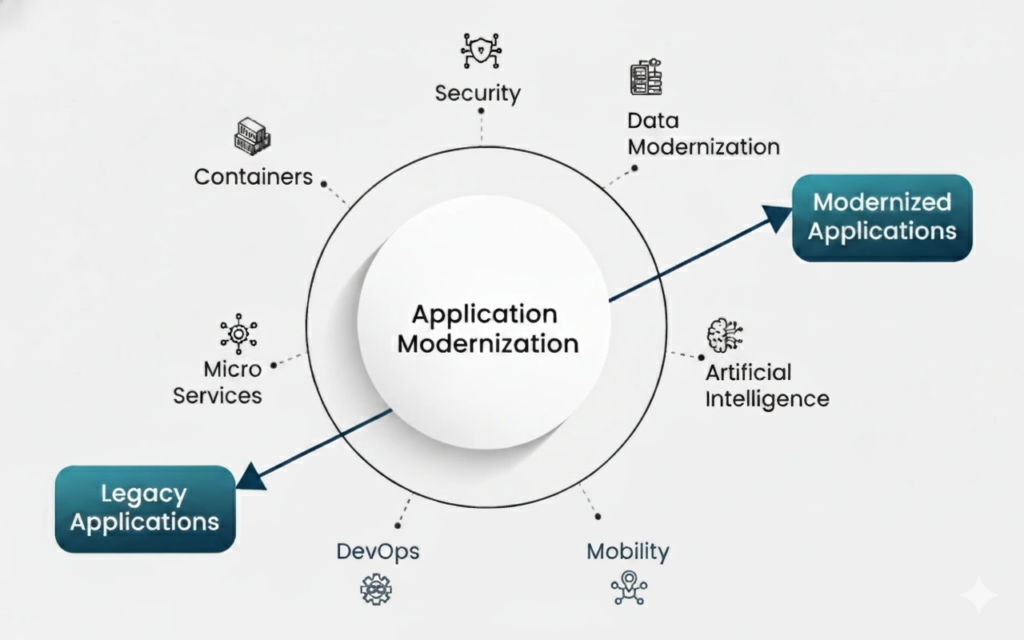
One of the most pivotal choices is the overall strategy, often guided by the “7 Rs” framework: Retire, Retain, Rehost (lift-and-shift), Replatform, Refactor, Rearchitect, and Replace (sometimes including Rebuild or Encapsulate as variants).
Quick, low-risk options like Rehost or Replatform suit time-sensitive migrations, offering rapid cloud benefits without deep changes. More transformative paths like Rearchitect or Refactor deliver greater long-term agility but demand higher effort and risk. Architects weigh factors such as business urgency, budget, team skills, and desired outcomes—often applying different strategies across a portfolio for balanced progress.
3. Defining the Target Architecture
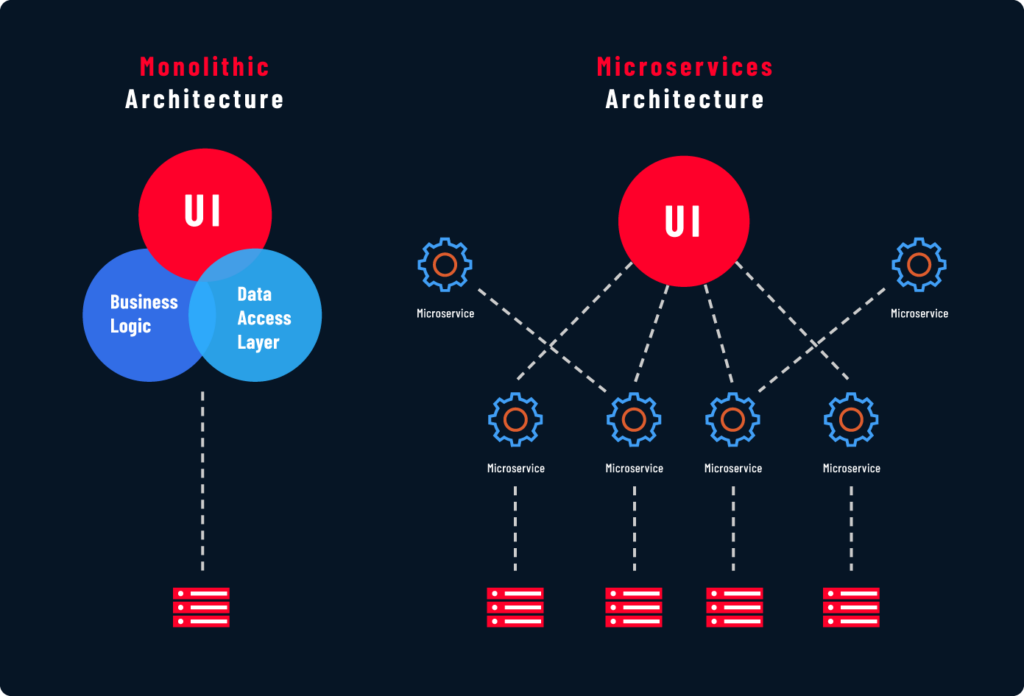
Architects envision the future state, deciding whether to retain a monolithic structure or shift to modular designs like microservices, event-driven systems, or serverless components.
Monoliths are simpler to manage initially but can become bottlenecks for scaling and independent deployments. Microservices enable flexibility, faster releases, and better fault isolation, though they introduce complexity in orchestration and communication.
Many projects adopt incremental approaches, such as the Strangler Fig pattern, where new features gradually replace legacy components while the old system continues running.
This decision hinges on scalability needs, team expertise, and tolerance for operational overhead.
4. Choosing the Deployment and Infrastructure Model
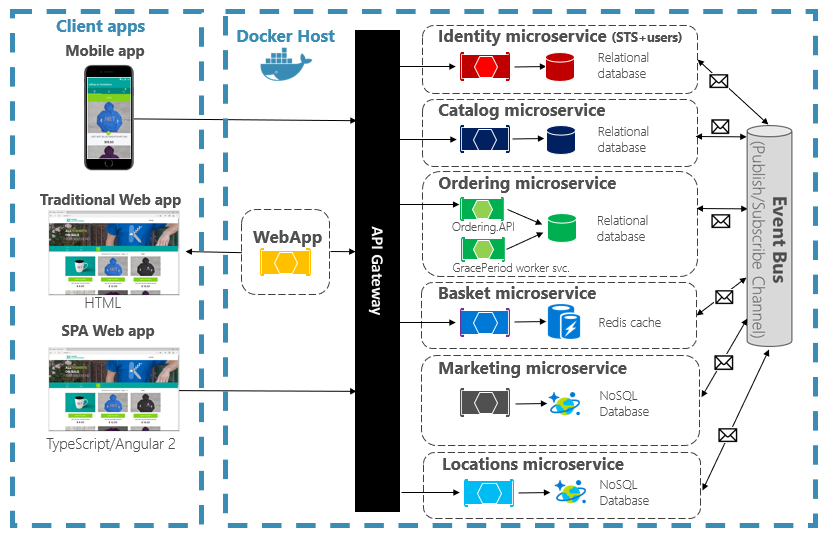
Architects select the hosting environment: fully on-premises, public cloud (e.g., AWS, Azure, Google Cloud), hybrid, or multi-cloud. Cloud-native designs, incorporating containers (Docker), orchestration (Kubernetes), and managed services, are increasingly standard for their elasticity and cost efficiency.
Trade-offs include vendor lock-in versus best-of-breed services, or keeping sensitive components on-premises for compliance. This choice influences everything from cost models (pay-as-you-go versus capital expenditure) to disaster recovery capabilities.
5. Selecting the Updated Technology Stack
Architects choose modern languages, frameworks, databases, and tools that align with the target architecture and team capabilities. For instance, shifting from a legacy stack to Node.js, .NET Core, or Java Spring Boot for services, paired with NoSQL databases or event streaming platforms.
Alternatives range from polyglot persistence (multiple data stores) to standardized stacks for maintainability. Decisions here consider developer productivity, community support, and integration with cloud services, while avoiding over-engineering with trendy tools lacking maturity.
6. Planning Data Migration and Management
Data often proves the trickiest element in modernization. Architects decide how to migrate, transform, and store data—whether through big-bang transfers, incremental syncing, or coexistence strategies.
Options include keeping relational databases, adopting cloud-native alternatives, or implementing event sourcing for resilience. Key trade-offs involve downtime tolerance, data consistency during transitions, and compliance requirements like encryption or sovereignty. Poor planning here can derail projects, so early involvement of data architects is essential.
7. Embedding Security, Compliance, and Operational Practices
Finally, architects integrate non-functional concerns from the outset, adopting DevSecOps, zero-trust security models, automated CI/CD pipelines, and comprehensive observability (monitoring, logging, tracing).
This includes shift-left security testing and infrastructure-as-code for reproducibility. Alternatives like bolting on security later increase risks and costs. Strong operational models ensure the modernized application is not just built right but runs reliably at scale.
These seven decisions form an interconnected roadmap rather than isolated choices.
Successful architects collaborate with stakeholders, pilot approaches, measure progress against KPIs, and embrace iteration. The result? A future-proof application that drives business value while minimizing disruption.